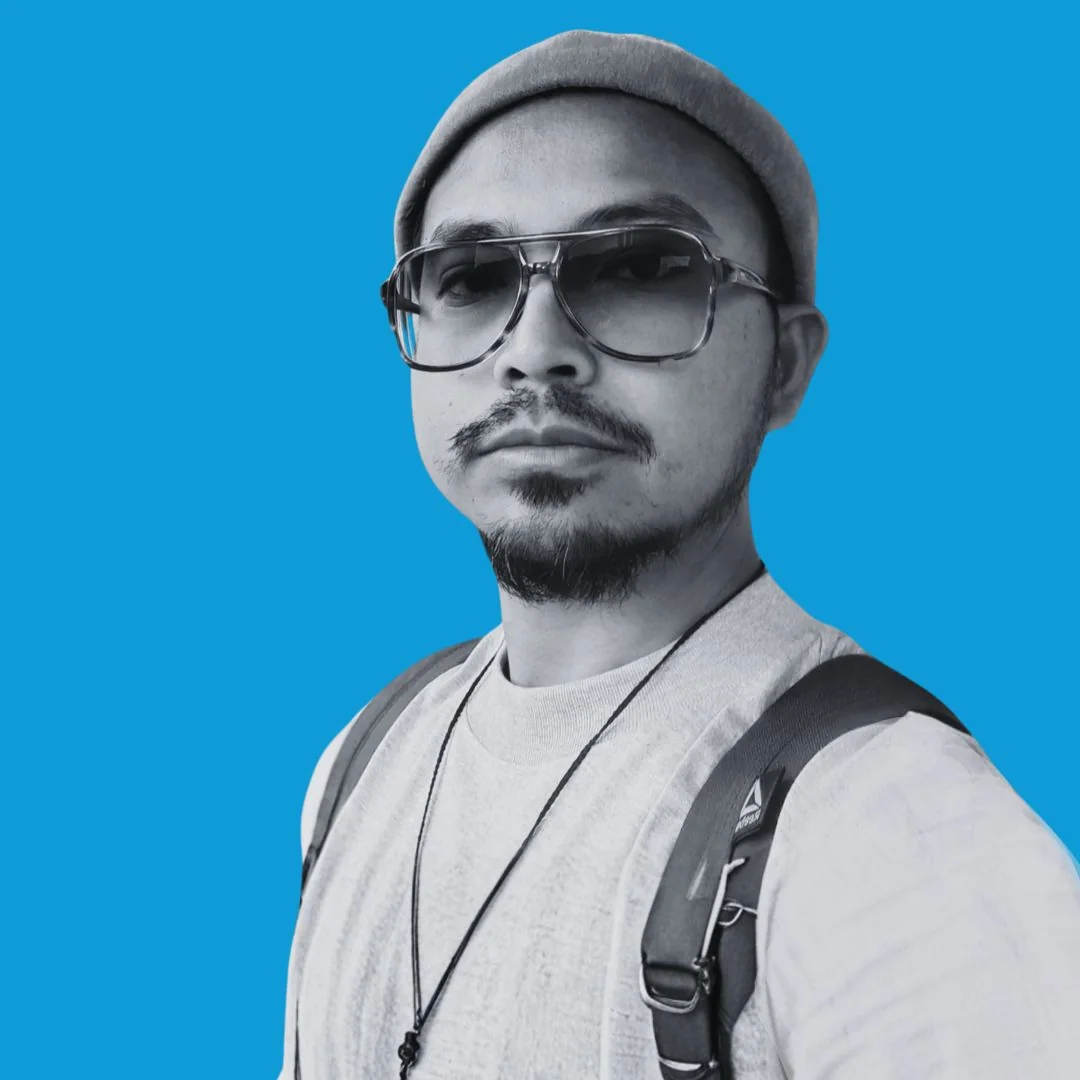
Workshops, training and talks
Sessions on decolonial technology, digital sovereignty and movement security, built for the people in the room. I trained as a teacher and have taught from Tower Hamlets classrooms to a Paris university.
I build because freedom is never given; it is constructed, defended, and sustained.
Because the stories we inherit shape the systems we accept, and the systems we accept dictate the futures we can imagine.
My work sits at the intersection of culture, artivism, and technology because that is where meaning becomes infrastructure. I am interested in how we protect what matters, organise with integrity, and design tools that serve liberation rather than extraction.
Through my hybrid framework and Razlosophy lens, I see creative practice, social change, and technical design as one continuous field. The aim is not innovation for its own sake, but regenerative direct action, to realise our imagined futures, and collective possibilities.
The operating system runs on four core principles that reject the false dichotomy between art and utility, theory and practice, beauty and function.
Four analytical frameworks for reading complex systems and identifying where intervention is possible.
The foundational beliefs running beneath everything — the base layer of the operating system.
I am a social entrepreneur, teacher, and Artivist operating within Digital Sovereignty — treating the digital realm not as an escape, but as a continuation of the physical struggle against oppression.
Drawing from the ethos of the Grapus collective — using design as a public utility — and grassroots frameworks, I contribute to building systems like HRDAO and the Commons Archive of Resistance.
My work combines strategic thinking, creative practice, and social purpose to design, build and contribute to projects rooted in justice and solidarity. To date, I have helped shape initiatives in education, tech for good, sustainability, and public memory, including Computers for Pupils, Sustainable ADA, Impact Web3, Manifest Studio Collective, Threads of Solidarity, and the Commons Archive of Resistance.
My approach draws from decolonial thought, systems thinking, and poetic inquiry. I am motivated by creating work that is beautiful, visionary, and grounded.
At the heart of it all is a simple commitment: to help build a better world where we can all thrive and flourish.
I take paid work from organisations that need to understand a system they sit inside and want to leave with something they can run themselves. Most of it falls into four kinds of engagement.
Sessions on decolonial technology, digital sovereignty and movement security, built for the people in the room. I trained as a teacher and have taught from Tower Hamlets classrooms to a Paris university.
A standing seat beside your team while you audit your technology stack, plan a move off extractive platforms, or design for a known threat model. I do this now for networks working under state-level surveillance.
Who is building what, who funds it, where the dependencies sit and where the gaps are. Past work includes contributing to a map of 51 Ethereum-based projects across the UN system for an Ethereum Foundation Next Billion fellowship, and a 592-page impact report on the Cardano ecosystem, co-written with Cole Bartlett.
Decision-making structures, onboarding and consent processes for shared infrastructure, tested with the people who will live inside them. The HRDAO pilot with Amnesty International Aotearoa New Zealand ran with 40 Amnesty advocates across Aotearoa New Zealand, Asia and Europe.
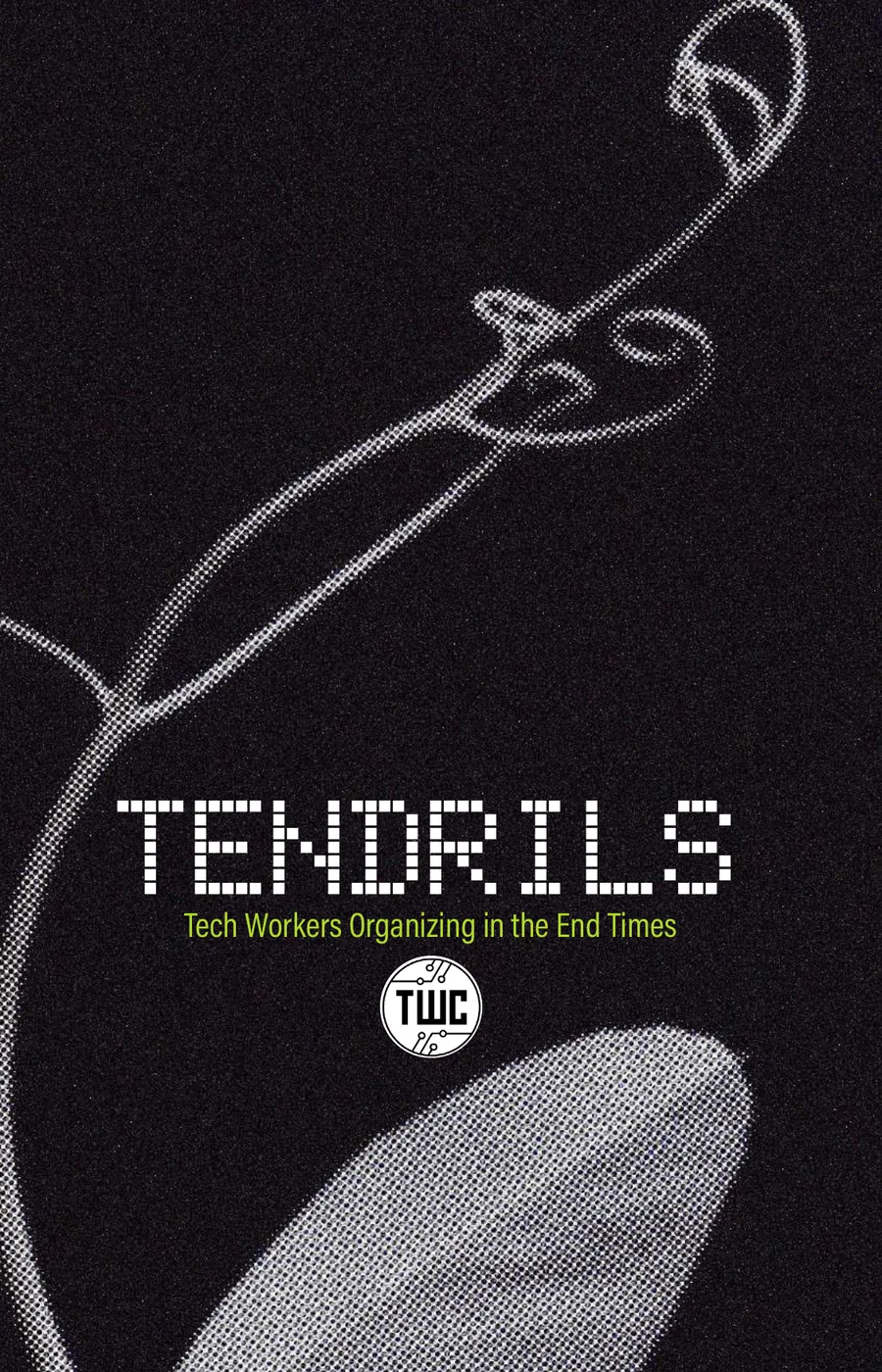
Published in Tendrils: Tech Workers Organizing in the End Times, the first zine from Tech Workers Coalition Global, launched 28 October 2026 after pre-launches at the Circuit Breakers conference in New York and the Tech Workers Conference in Berlin. Free to read, print and circulate.
Read ▸Interviewed by CIVICUS, the global alliance of civil society organisations and activists, on artivism, Threads of Solidarity, platform risk and the tools built in response.
Read ▸Invited to present at Solidarity AI, convened by the Platform Cooperativism Consortium at Chulalongkorn University.
More ▸Presented at the 4S Annual Meeting (Society for Social Studies of Science), in the panel Design, Resistance and Radical Speculation. Paper with Gareth Farry.
Programme ▸Bilingual English and French workshop at Festival Technopolice 2026 in Montreuil, France, co-facilitated with Tribe-X.
Programme ▸Set the challenge brief for the Data Empowered Societies track at UCL Innovation Fest, run by UCL Grand Challenges and UCL Students' Union.
More ▸Selected for the prototype phase, building Manifest for a challenge on trust in the AI era.
More ▸Selected from the cohort as a finalist to pitch.
Infrastructure outlasts its funders when the people who depend on it helped to map it, helped to design it, and can run it without me. Every engagement follows the same path, read through three filters.
Actors, money, dependencies, risk. Who holds power in the system and who carries its costs.
Options worked out with the people who will use and govern the result, in language they chose.
One concrete thing: a curriculum, a governance model, a report, a working tool.
Documentation, training and a clean exit, so the work keeps running after I leave.
Whose knowledge counts here, and who is being read, sorted or extracted from?
Where is the single point of failure or control, and what happens when it is withdrawn?
Who decides, and how can the people affected hold that decision to account?
My working life began in London before the 2008 financial crisis. Since then it has run through classrooms and family homes in Tower Hamlets during the austerity years, forest campaigning in Jakarta, reporting on water and deforestation across Asia, lecturing in Paris, four years inside decentralised governance, and now human rights infrastructure.
I studied economic and social policy, then water management at Imperial College London, then sustainable development at Paris-Dauphine, and trained as a teacher along the way. I was raised between London, Malaysia, the Philippines and Singapore. That range is why I read an organisation as money, ecology, technology and people in one picture, and why I can explain that picture to those who did not build it.
Paid commissions, partnerships and solidarity work sit side by side here. Ask me about any of them.
Rates scale with your organisation's income. Institutional fees are what make the solidarity places possible. You choose your own tier and I take your word for it.
Grassroots groups, unfunded collectives and global majority organisations with little or no budget.
Pay what you can, an exchange, or pro bono. A set number of places each quarter.
Small NGOs, cooperatives, student groups and independent media, up to roughly €500k annual income.
Reduced day rate and fixed-price workshop packages.
Universities, foundations, international NGOs, public bodies and companies.
Full rate. Part of each fee funds a solidarity place.
I do not take work from fossil fuel, arms or defence companies, or from organisations engaged in greenwashing, extractive practice or complicity in genocide.
Tell me who you are, what you need and when. I reply with a tier, a rate and a short proposal.
Start a conversation ▸Five shortcuts into the Commons Archive of Resistance, the single-file library I maintain for people organising under surveillance. Each one is a direct link; the archive runs without an account, can be downloaded, and works offline.
A monitor for the conditions movements are working in: the state of civic space, where the internet is being shut down, and who is under pressure for documenting it.
The movements and thinkers behind the tools: 37 liberation movements across eight regions and 62 praxis thinkers, traced as a lineage rather than a list.
Over 200 vetted digital tools and 20 physical commons spaces placed on a world map, so you can see what exists near you and who is building it.
Answer a short questionnaire about your situation and threat level and receive the tools, thinkers and resources that fit it, with free and open-source exits from each big tech service.
A field guide for human rights organisations, nonprofits, movements and individuals moving off big tech and onto free, open-source and self-hosted tools. Published under CC BY-SA 4.0.
Nothing here is loaded from another site. The side panel is the archive's own Vital Signs module, rebuilt from each archive release and served from this domain.
Erg Chebbi, Sahara Desert, 2020. Re-membering. Re-connecting. Memory and time is non-linear.
2020 · ERG CHEBBI, SAHARA DESERT POEM ON-CHAIN ▸
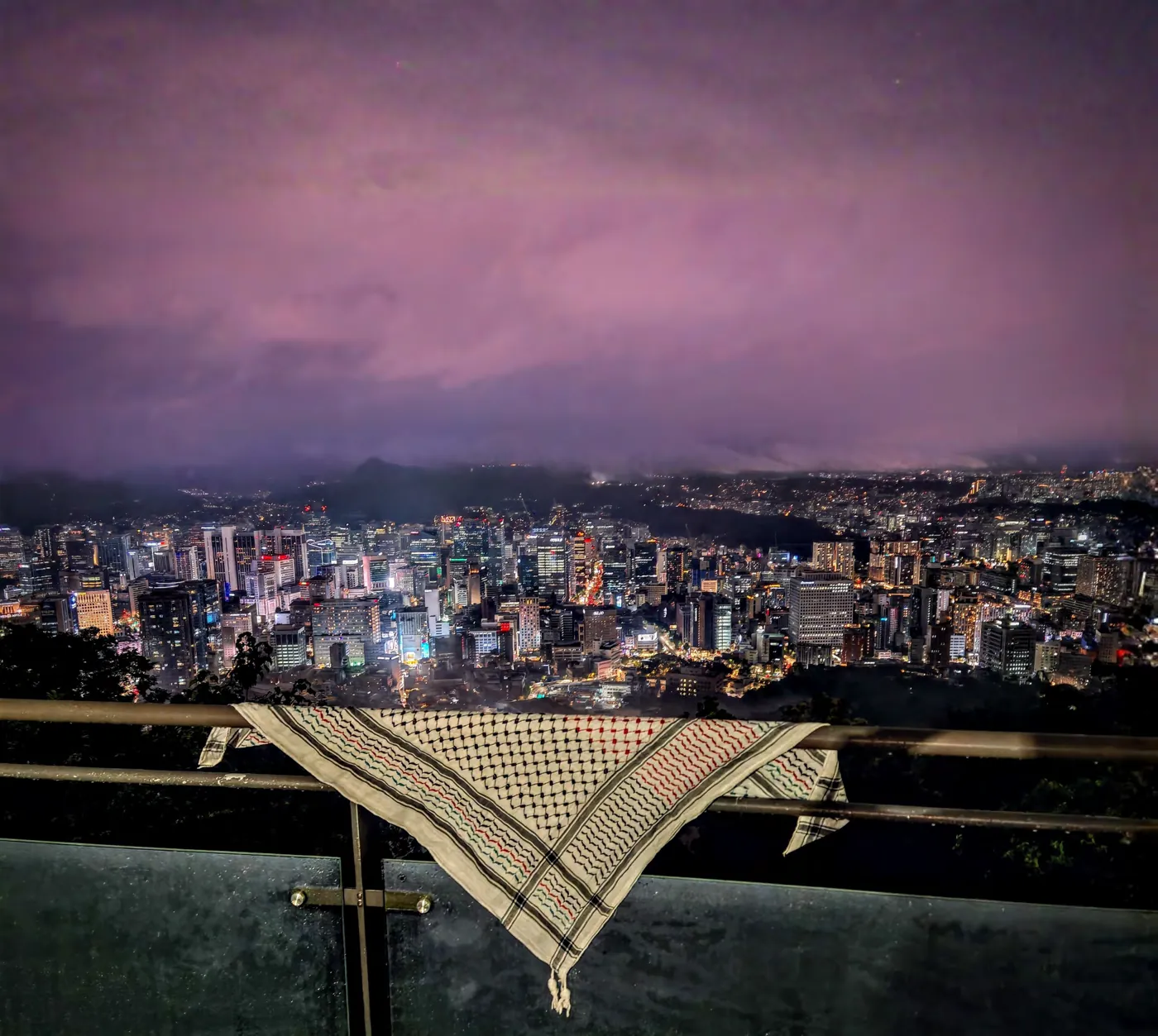
from the kufiyah’s perspective
Out the window
The moon shines
My wing blinks
My heart calls for what’s
behind
Down below
We look up
With hands together
Hoping for rain
to wash the pain
the blood
the tears that trace our fears
that aged our land.
Running years
turning gears
Searching for the summit
Till we found each other.
Like a blanket on a cold night
Truth wrapped in light
Our spirit takes flight.
by Razali Samsudin
READ WITH THE ESSAY ▸
On being assembled across the empire’s fault line, and on whose threat model tech workers build for when they organise.
On the sarong and the kufiyah, and on bodies that are read before they speak.
A Hirbawi kufiyah from Al-Khalil, carried from Bandung to London and on towards Goma.
CIVICUS, the global alliance of civil society organisations and activists, interviewed me for its Lens platform about artivism and how to keep it safe online. The conversation runs from a childhood spent drawing, through Threads of Solidarity and the kufiyah that reached Goma in September, to the risks artivists carry on mainstream platforms and what Manifest and the Commons Archive of Resistance are built to do about them.
Simply drawing with pen and paper is an act of resistance.RAZALI SAMSUDIN, CIVICUS LENS
Art and activism cannot be separated. Art invites us to ask what we want to say, what difference we want to make and whether that difference is positive.RAZALI SAMSUDIN, CIVICUS LENS
Who decides what goes into a shared archive matters as much as the technology.RAZALI SAMSUDIN, CIVICUS LENS
On screen only. The CV is not offered for download; a PDF copy is available on request.