The Garment That Reads You First
I was the only Southeast Asian boy in my primary school in Essex. My memory of my Dad, who lived in Malaysia, was of him wearing a sarong at home - the kind worn by men across Southeast Asia for centuries, practical and dignified, as natural as a pair of jeans. The other children had an opinion about that. Sarongs were for girls. This was funny. It said something about us that we were meant to be embarrassed by.
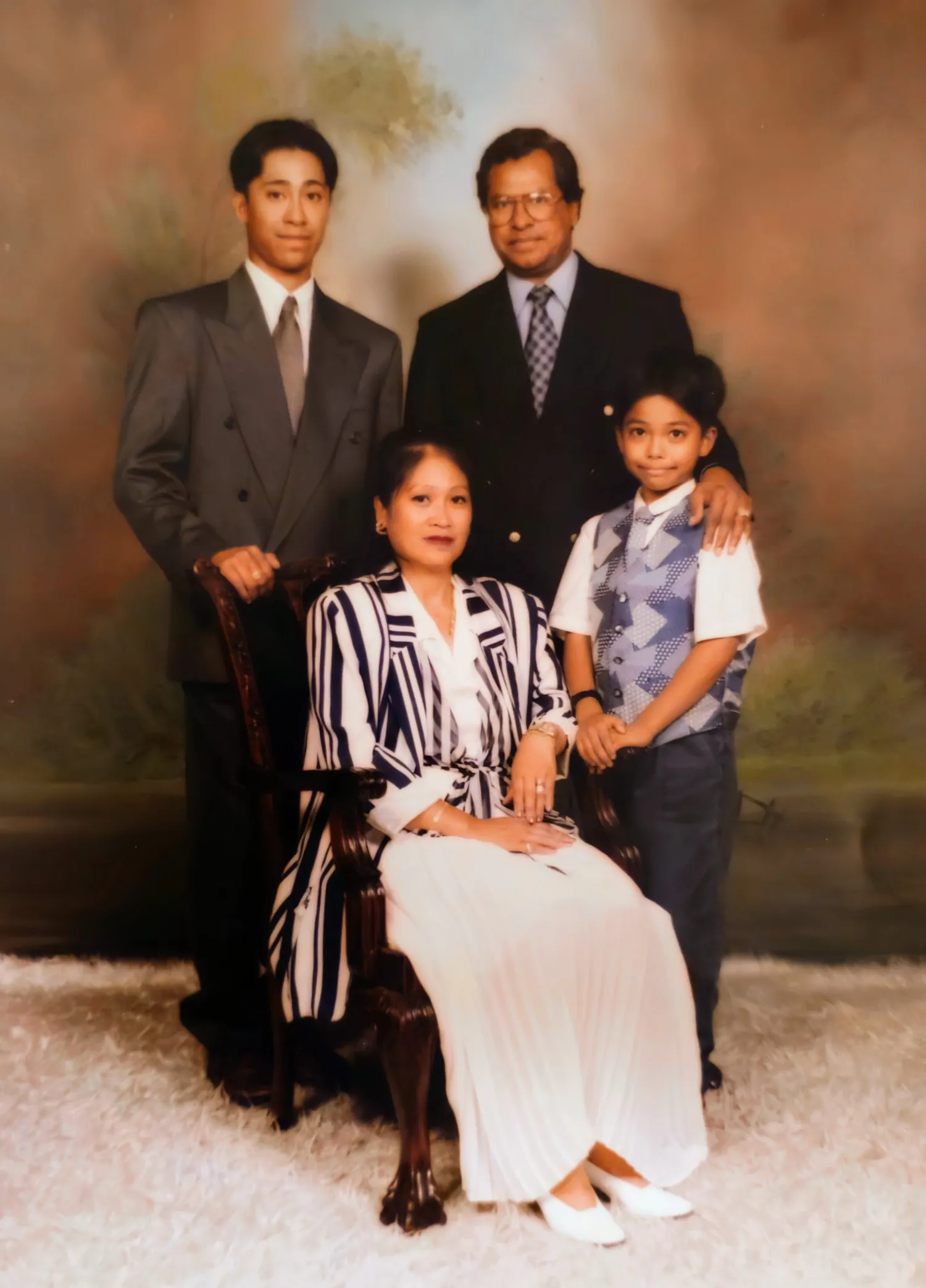
Then David Beckham wore one in 1998, photographed with Posh Spice, and the same garment was suddenly fashion news. I remember seeing that photograph and feeling it. Pride. Shame. Anger. Not one fibre of the cloth had changed. What had changed was whose body it was on - and therefore who was permitted to say what it meant.
My childhood moved between London and Johor. In those Malay homes in the early nineties, the elders talked about Palestine the way you might talk about a family obligation - not as a distant cause, but like a blood pact.
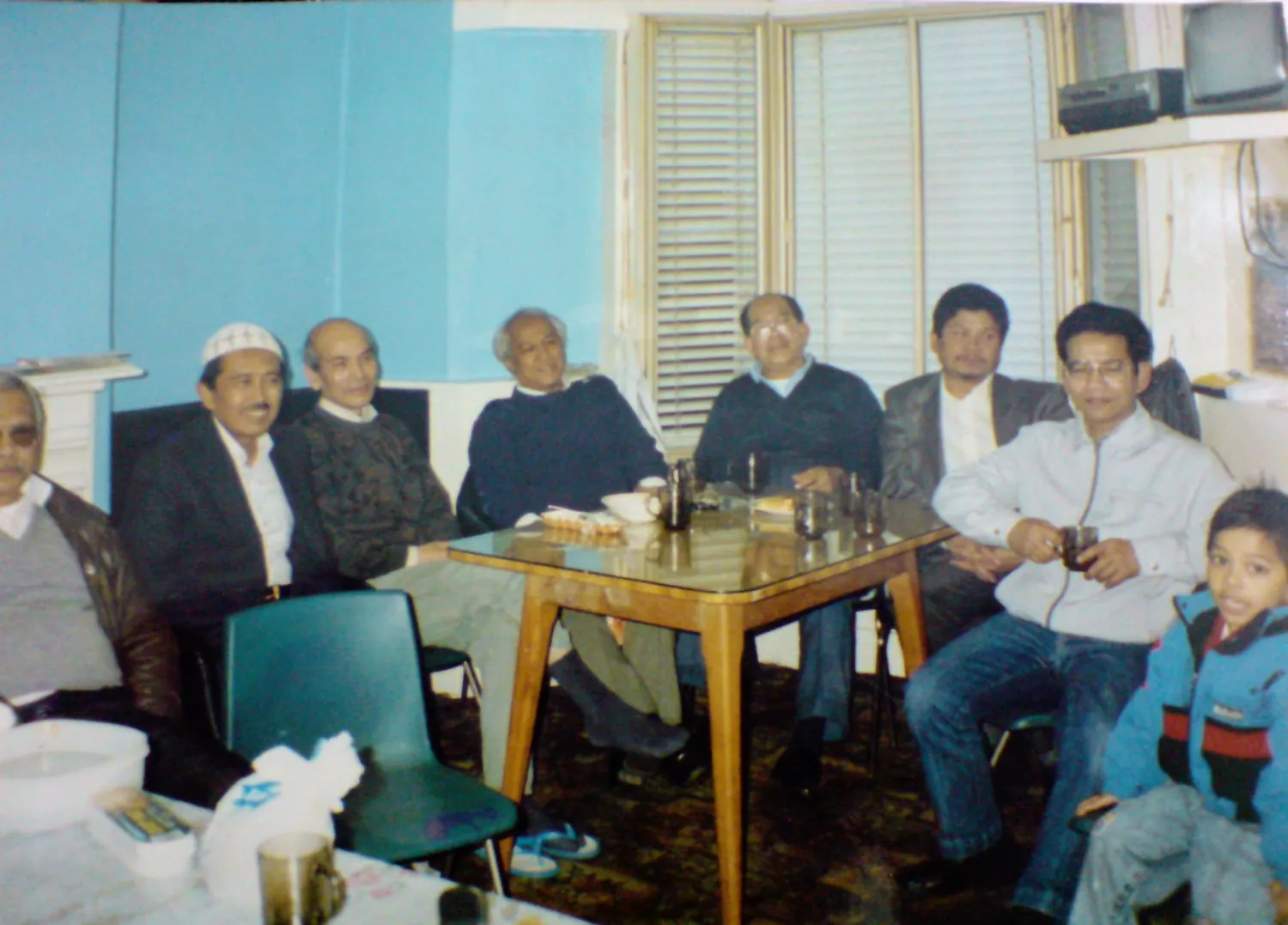
Malaysia has never recognised Israel - not as diplomatic abstraction but as national identity. Since independence in 1957, every Malaysian passport has carried the same line: This passport is valid for all countries except Israel. The First Intifada was running throughout the early nineties. In those homes, Palestine was not distant geography. It was ummah - the community of believers - which made it family obligation, not foreign cause. My Dad and the people around him would talk about occupation, about dispossession, about the duty we had to stand alongside our fellows in Palestine. Solidarity with our brethren. I was too young to connect that conversation to what was happening in the playground. But something registered. Something about bodies that are read before they speak. About what clothing announces before you open your mouth.
Once you see that mechanism, you start seeing it everywhere. Some garments erase their histories. Others carry them, visibly, across nearly a century of attempts to make them stop.
The bikini swimsuit was named four days after the United States detonated the first of sixty-seven nuclear weapons across the Marshall Islands in 1946. A Parisian designer called his product explosive. He said it would cause a sensation like the bomb. The Marshallese were displaced, irradiated - Bikini Atoll, the world’s most radioactive island, has not been habitable since. Twenty-three weapons were detonated at Bikini Atoll alone, including Castle Bravo, a hydrogen bomb one thousand times the yield of Hiroshima. The people are still waiting to go home.
Almost no one at any beach or pool I have ever visited knows any of this. The garment travels the world. The violence it was named for does not travel with it. Empire’s vocabulary becomes leisure’s vocabulary, and we are supposed to forget there was ever a difference.
The kufiyah does something different.
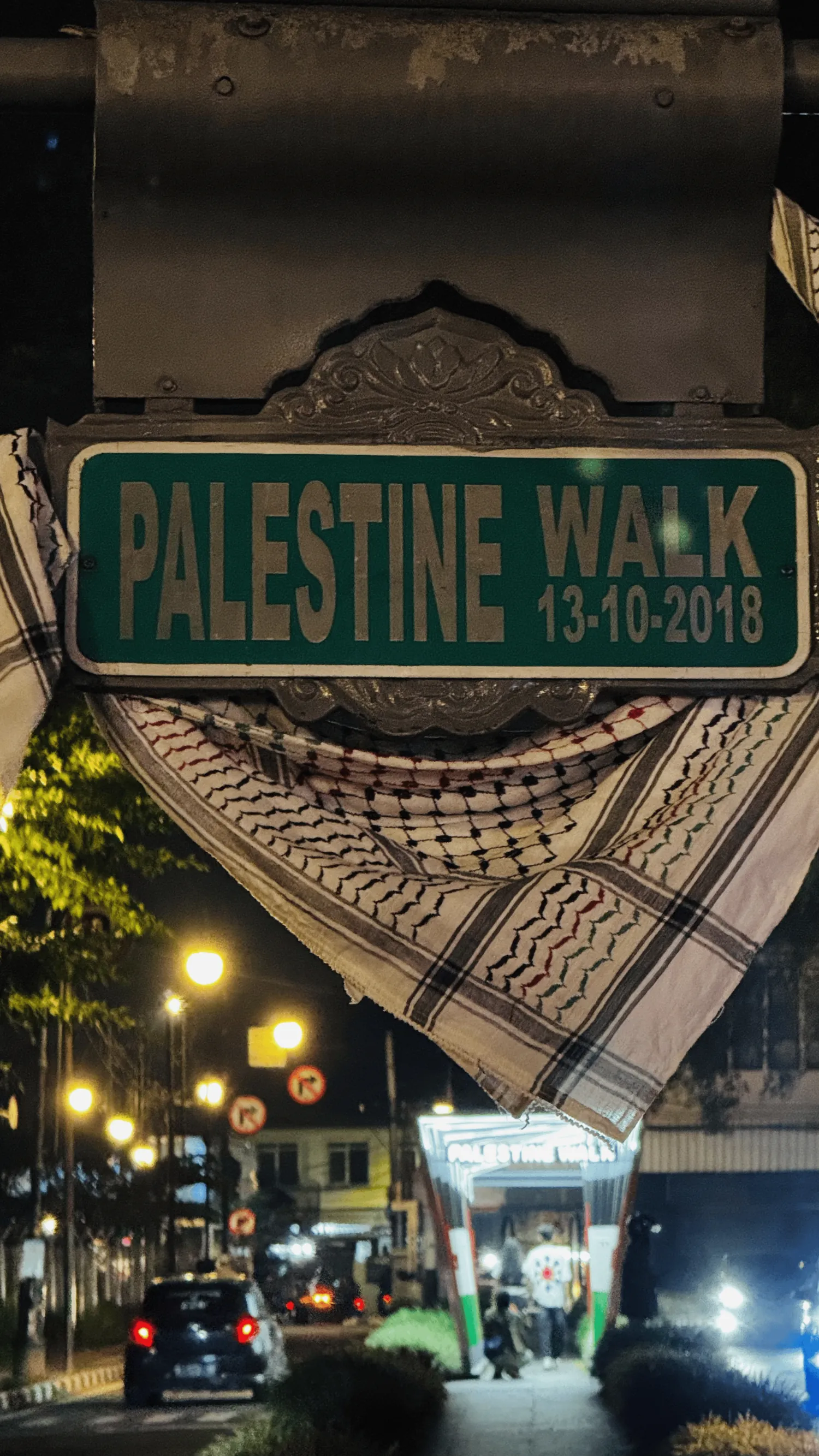
I carry one from the Hirbawi factory in Al-Khalil/Hebron - the last operating Palestinian kufiyah manufacturer on Palestinian soil - and have carried it through sixteen cities across three continents over the past two years as part of a project I’ve called Threads of Solidarity. London, Paris, Kuala Lumpur, Manila, Tunis, Seoul, Brussels, Berlin, Barcelona, Budapest, Bohol. I have photographed it at each stop. I have watched how it is read.
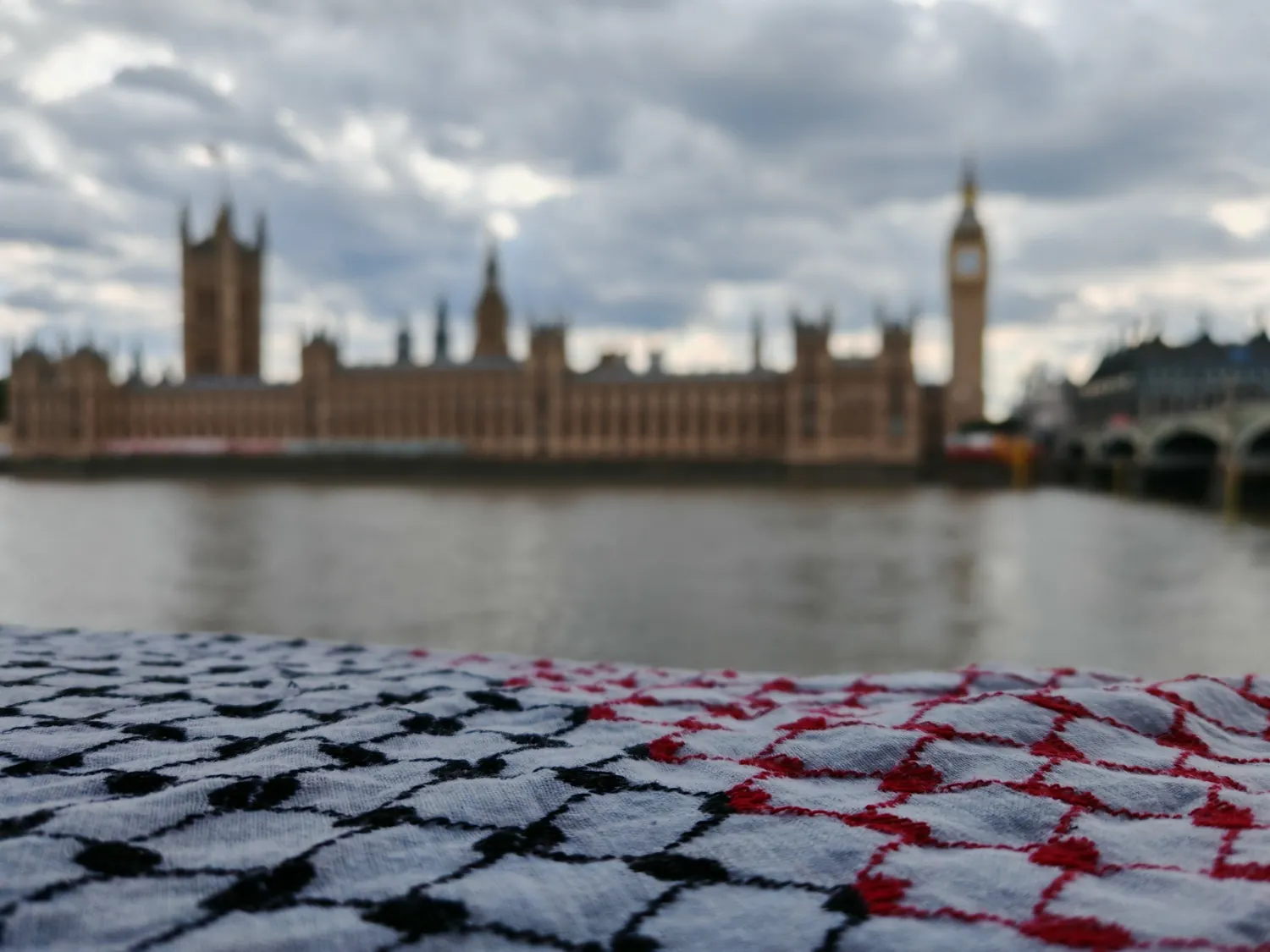
In some cities the reading is warm, hospitable and immediate - people know what it is, reach across, touch it, nod, salute, and scream. In a café in Paris, an older man behind the bar held my gaze, said Filasteen, and nodded. A waiter and security at a brasserie saluted me and said Respect, hands on hearts, as I wrapped the kufiyah around my neck to brave the winter chill. In others, in certain airports, in certain rooms, on certain streets, I feel the atmosphere rearrange. Subtly. A slight shift in who looks and who decides not to. A broken rhythm. A pause. Who crosses the road, and who smiles with their eyes. After watching Palestine 36, taking a photograph of the poster, a man sitting at a table beneath it looked up, stood, and said: I’ve had enough. Enough. Which is how such things usually work. That is also how the sarong worked, in reverse, the day Beckham wore it.
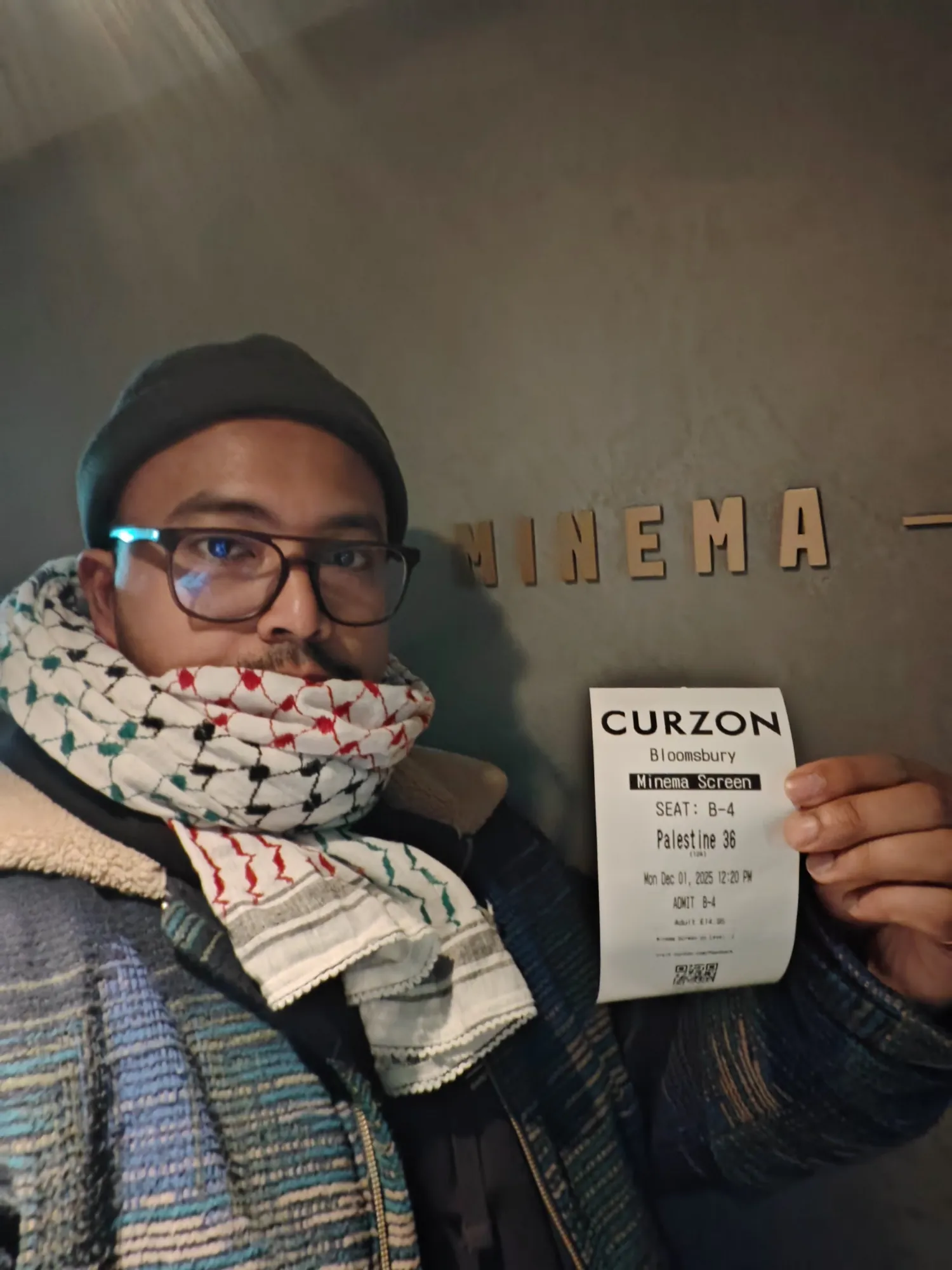
I have learned to read a street and a room before I unwrap the cloth. The body that has been read all its life has learned to do the reading. I expected the reading to sort by country, the way a map sorts by colour - to know a city by its flag and carry the cloth accordingly. It has never held. The salute and the enough have come from cities I would have filed under the same heading; the shift I learned to feel was never national but smaller, harder to govern - a room, a doorway, the makeup of a single face. The prediction I keep wanting, the one that would let me wear the kufiyah without thinking, is the one I have never once been able to trust. I carry it anyway. But I have stopped pretending I carry it freely.
Ai Weiwei’s Study of Perspective, an image-series I saw at exhibition, captures a single gesture: one hand, raised, with a middle finger - documented against every monument of authority on the planet. Tiananmen. The White House. The Reichstag. The Eiffel Tower. What stayed with me, standing in front of it, wasn’t the defiance. It was the ritual of it. The practice. The years of dedicated repetition required before the gesture became what it became. It is in the kufiyah, city by city, stop by stop. Debord argued that the spectacle severs objects from their histories. The cloth is still the factory, the water, the hands. It refuses the severance.
I was taught this early - in those kampung homes, sitting painfully cross-legged in Johor, near the rotating fan, in the way the elders spoke, heatedly, in a household that understood solidarity as duty and love. That small acts practised daily, rituals of care, can sustain what we need to live. That love - the kind that shows up, at all costs, carries a cloth through sixteen cities and photographs it and builds a record of its passage - is a form of infrastructure. Harvey writes about the right to the city as something that must be claimed in practice, not granted in theory. A daily accumulation of presence. The cloth enacts this wherever it goes. It is not a statement. It is a practice. It is not a symbol. It is cotton, water, dye, hands, sweat, and time.
The issue as printed, from the cover through to the back. Tap a page to open it, then tap again to zoom.
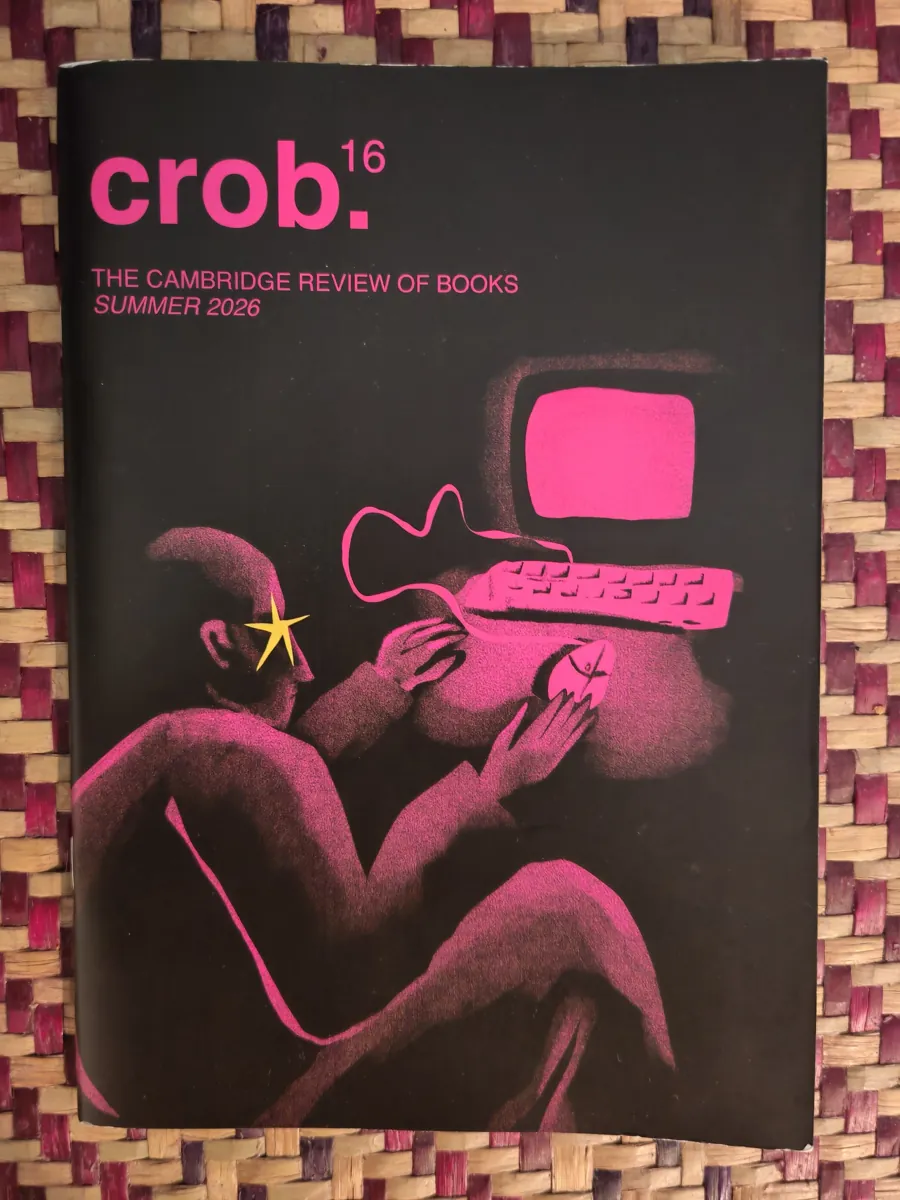
This essay appears in the Summer 2026 print issue of crob., The Cambridge Review of Books. Print copies support the magazine and its contributors.
Buy the print issue